
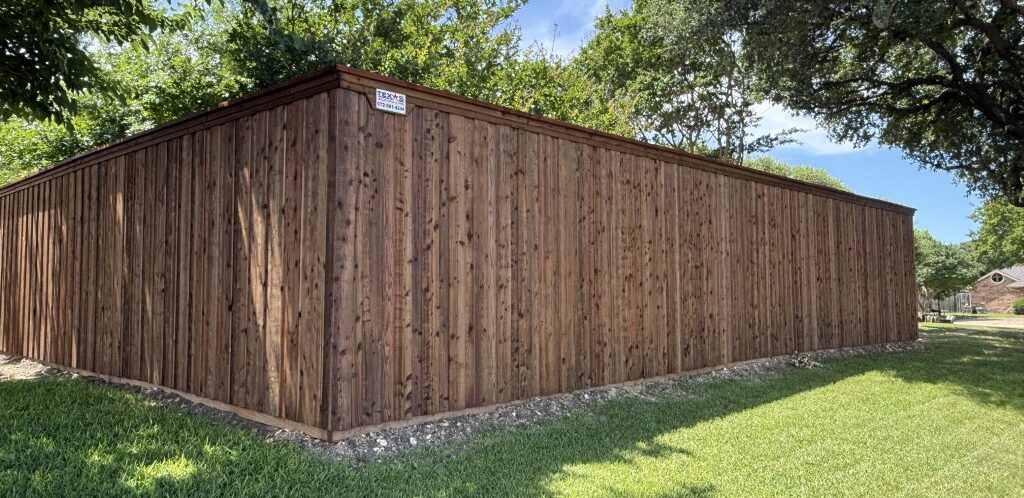
If you’re planning to install a new cedar fence in Dallas–Fort Worth, one of the decisions you may have to make is which type of cedar to use. Two popular options are Western Red Cedar and Japanese Cedar.
Both can create a beautiful wood fence, but there are differences in appearance, durability, and price that may make one a better fit for your home and budget.
So, what’s the difference between Western Red Cedar and Japanese Cedar, and which should you choose for your fence? Let’s break it down.
What Is Western Red Cedar?
Western Red Cedar is a premium fencing material known for its rich color, attractive grain, and natural resistance to decay and insects. It has long been a popular choice for homeowners looking for a high-quality wood privacy fence.
One of the first things you’ll notice about Western Red Cedar is its appearance. The wood can have rich reddish-brown tones and natural variations that give a finished fence plenty of character.
Western Red Cedar is also naturally resistant to moisture and decay, making it well suited for outdoor applications. With proper installation and maintenance, a Western Red Cedar fence can provide years of beauty and privacy.
Why Choose Western Red Cedar?
Western Red Cedar may be the right choice if:
- You want a premium-looking cedar fence.
- The natural color and grain of the wood are important to you.
- You’re willing to spend more for a higher-end fencing material.
- You want a fence that complements the appearance of your home and landscaping.
- Long-term durability is a priority.
For homeowners who want to invest in the overall appearance and quality of their fence, Western Red Cedar is hard to beat.
What Is Japanese Cedar?
Japanese Cedar is another option we use for wood fencing at Texas Backyard Living. It offers the warm, natural appearance homeowners want from a cedar fence while typically coming in at a more budget-friendly price than Western Red Cedar.
This makes Japanese Cedar a great option for larger fence projects or homeowners who want the look of a new cedar fence without moving into the higher price range of Western Red Cedar.
When properly installed and protected with a quality stain, Japanese Cedar can create a beautiful finished fence that provides privacy, functionality, and great curb appeal.
Why Choose Japanese Cedar?
Japanese Cedar may be a good fit if:
- You want the appearance of a cedar fence at a more affordable price.
- You have a larger fence project where material costs can add up quickly.
- You plan to stain the fence, making the natural differences in wood color less noticeable.
- You want to balance appearance, quality, and budget.
For many DFW homeowners, Japanese Cedar provides a great combination of value and appearance.
Western Red Cedar vs. Japanese Cedar: What’s the Biggest Difference?
For most homeowners, the decision comes down to appearance, durability, and budget.
Western Red Cedar is generally considered the more premium option. It is known for its distinctive natural coloring, grain, and durability, but those advantages typically come with a higher price.
Japanese Cedar provides an attractive cedar look at a lower price point, making it a popular alternative for homeowners who want a quality wood fence while keeping the overall project cost down.
The difference can become especially important on larger properties. When you’re installing hundreds of linear feet of fencing, the difference in material price can have a noticeable impact on the total cost of the project.
Pre-Stained Cedar Picket Comparison
| Feature | Western Red Cedar | Japanese Cedar |
|---|---|---|
| Appearance | Rich red hues, distinctive grain, moderate color variation, minimal defects | Brown hues, distinctive grain, moderate color variation, moderate defects |
| Durability | ★★★★★ | ★★★★☆ |
| Cost | $$$ | $$ |
| Resistance to Warping, Rot & Insects | Excellent | Good |
| Maintenance Needs | Minimal | Moderate |
| Expected Lifespan with Maintenance | 25–30 Years | 15–20 Years |
| Warranty |
10-Year Workmanship 1-Year Material |
10-Year Workmanship 1-Year Material |
What About Staining?
Whichever cedar you choose, staining your fence is one of the best ways to protect your investment.
Texas weather can be tough on an unprotected wood fence. Sun exposure, rain, humidity, and temperature changes can cause the wood to fade and weather over time.
A quality exterior wood stain helps protect the fence while also enhancing its appearance. Depending on the stain you select, you can preserve more of the natural character of the cedar or give the fence a richer, more consistent color.
Our sister company, Texas Best Stain, specializes in professional fence staining and can help protect both new and existing cedar fences.
Which Cedar Fence Should I Pick?
There isn’t one answer that works for every homeowner.
If you’re looking for a premium fence with beautiful natural grain and excellent durability, Western Red Cedar may be worth the additional investment.
If you’re looking for a beautiful cedar fence while keeping your project more budget-friendly, Japanese Cedar may be the better choice.
Your fence style matters too. Both materials can be used to create attractive board-on-board, side-by-side, horizontal, and other custom fence designs. The right combination of wood, design, stain, trim, and other details can make just as much of an impact as the cedar species itself.
Let Texas Backyard Living Help You Choose
Still not sure which cedar is right for your fence? That’s where we can help.
At Texas Backyard Living, we build custom fences throughout the Dallas–Fort Worth area and can walk you through your material and design options based on your home, budget, and the look you’re trying to achieve.
Whether you choose Western Red Cedar or Japanese Cedar, our goal is the same: build a fence that looks great, is professionally installed, and adds lasting value to your outdoor space.
Ready for a new fence? Contact Texas Backyard Living today for a FREE estimate and let us help you find the right fence for your home and budget.
